Reclaim your mornings.
On the first ninety minutes of the day, and why the women I most admire have all, in different ways, quietly defended them. A small manifesto for taking back the hour before the world is allowed in.
For most of my twenties I gave my mornings away without noticing. The first thing I did on waking, before I had a thought that was properly mine, was reach for the phone on the bedside table. What followed was a small tsunami of other people's needs, other people's news, other people's opinions about what I ought to be worried about. By the time I had made coffee I was already an hour into someone else's day.
I did this for roughly a decade. It was not until my mid-thirties, watching a woman I admire drink her tea in silence for twenty minutes while the rest of the household orbited her, that it occurred to me the shape of the morning was a choice. I had thought it was a fact. It is not a fact. It is a decision, made once a day, that the entire rest of the day rests on.
The ninety-minute rule
The women I most admire — a specific handful, across three cities, all doing very different work — share nothing in common except this. The first ninety minutes of their day belong to them. Not to the phone. Not to the inbox. Not to whatever crisis has arrived in the group chat overnight. Ninety minutes, roughly, of a life lived at their own pace, before the day is allowed to begin.
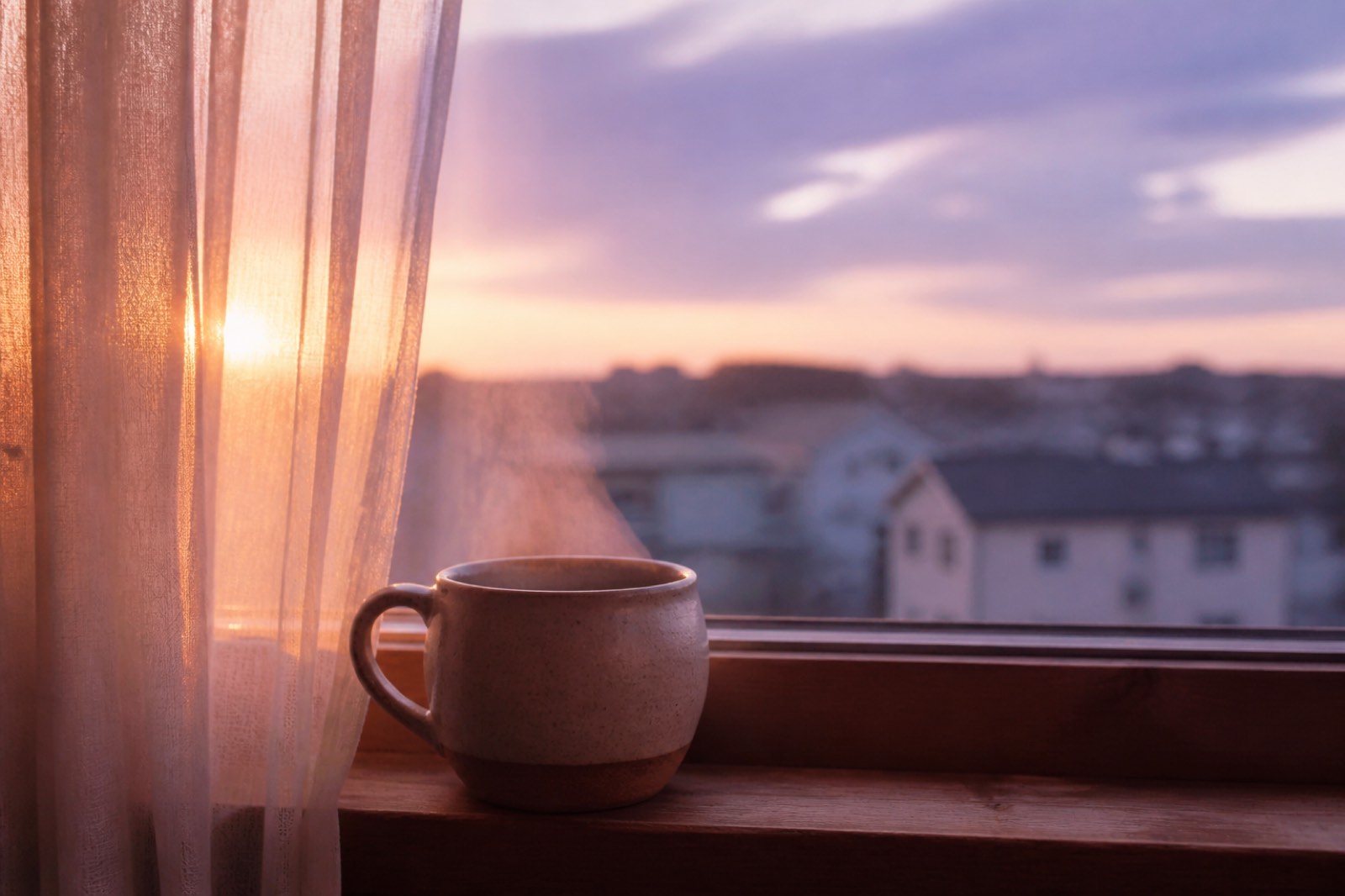
They spend the ninety minutes very differently from each other. One writes. One walks. One sits in the same chair with a cup of tea and looks out the window at a piece of London she has looked at for eleven years. One does yoga. One reads twenty pages of a novel that has nothing to do with her work. What they are doing does not matter. That they are doing it is the point.
The first ninety minutes of the day are not a productivity hack. They are the small act of self-respect that makes the other twenty-two and a half hours survivable.
Why the phone is the wrong first thing
There is a technical reason and a spiritual reason. The technical reason is that the first hour after waking is the only hour of the day when your mind is arriving fresh, without the accumulated static of everyone else's requests. If you spend that hour reading email, you have handed your best hour of the day to a queue of strangers.
The spiritual reason is worse. Every time you begin your day by responding to what other people put in front of you, you rehearse being a person who is responded to rather than a person who initiates. You do this every morning for a year and something changes in the shape of who you feel yourself to be. This is not a small thing. It is one of the more consequential quiet decisions a woman can make, and most of us are making the wrong one, once a day, at seven in the morning.
What the ninety minutes are for
You do not have to do anything ambitious with them. You do not have to journal for thirty minutes or meditate or do the twelve steps of anyone's morning routine. If the last decade of "morning routine" content has taught us anything, it is that a morning that has been optimized within an inch of its life is not a morning that belongs to you.
What the ninety minutes are for is for you to be alone with yourself before anyone else is. That is it. That is the whole thing. If you spend them staring at a wall, that is a valid use of the ninety minutes. If you spend them writing three pages of nonsense, also fine. If you spend them making coffee, drinking it slowly, and reading the physical newspaper without opening the phone once, that is one of the more radical things a woman can do in the year 2026, and I recommend it warmly.
The rules I found useful
There are three, and I break them roughly twice a week, which is often enough to know they are the right three.
One: the phone stays in another room overnight. Not on airplane mode. Not face-down on the nightstand. In another room, plugged into a socket you cannot see from the bed. Buy an alarm clock. Yes, a physical one. They still make them. This single change is more consequential than everything else on the list combined.
Two: nothing gets read until you have been awake for an hour. Not the news. Not the Slack. Not the group chat. Not even the "just a quick check of the inbox to make sure nothing is on fire." Nothing is on fire that will not still be on fire in an hour, and if it is, you will be a more useful person to it after an hour of not looking at it.
Three: the ninety minutes are the same shape every day. This is the one I resisted for a long time and it is the one that turned out to matter most. Variety is the enemy of a morning that survives contact with the rest of your life. The women whose mornings hold do the same three or four things, in the same order, in the same chair, every day. It looks boring from the outside. It is, from the inside, the freest hour of the twenty-four.
The morning as an ideological act
I am aware that a manifesto about ninety minutes of quiet coffee sounds like a very small thing to write a manifesto about. But look closely at whose mornings, in a given household, are protected, and you will see something quite old and quite persistent about how women's time gets used. The mornings of the men we love have been culturally protected for a hundred years — the newspaper, the study, the twenty minutes of grumpy silence at the breakfast table. The mornings of the women we are have not.
Reclaiming the morning is therefore not, or not only, a wellness project. It is a small political act inside your own household. You are declaring that the first ninety minutes of your day are not communal property. This will not be well received in every household. That, too, is data.
What actually changes
A year of protected mornings will not turn you into someone else. It will turn you into a version of yourself that you have not spent much time with — the version that has been in the room, calmly, for ninety minutes, before anyone asked her a single thing. She is a slightly different woman by breakfast than the one you have been for most of the last decade. She is not, as far as I can tell, more productive. She is more herself.
The women I most envy at forty-five are the ones who have been that version of themselves, once a day, since they were thirty. It is not glamorous. It is not on Instagram. It is one cup of tea, one chair, one hour that no one else in the house has learned to interrupt yet. The ambition of your life, quietly, is in there somewhere. Set the alarm clock. Put the phone in the other room. Start tomorrow.
Yasmin Hadi is a writer in London. She has been keeping the first ninety minutes of her day since 2022 and reports, with a small amount of astonishment, that it has changed nearly everything else.